
Galapagos Safari Camp
Santa Cruz, Galapagos Islands, Ecuador
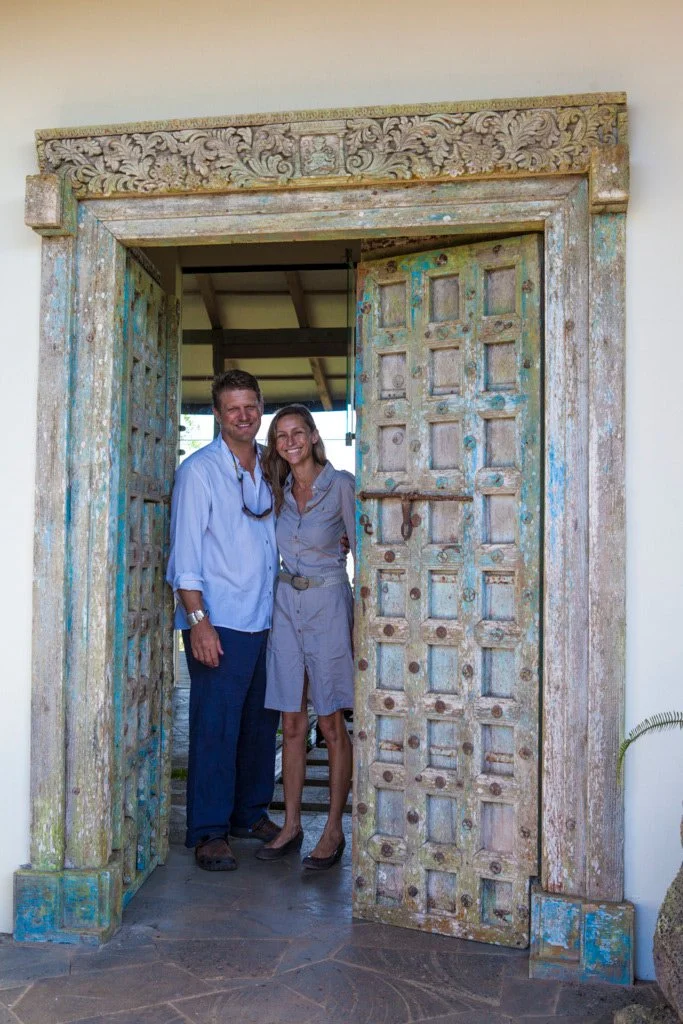
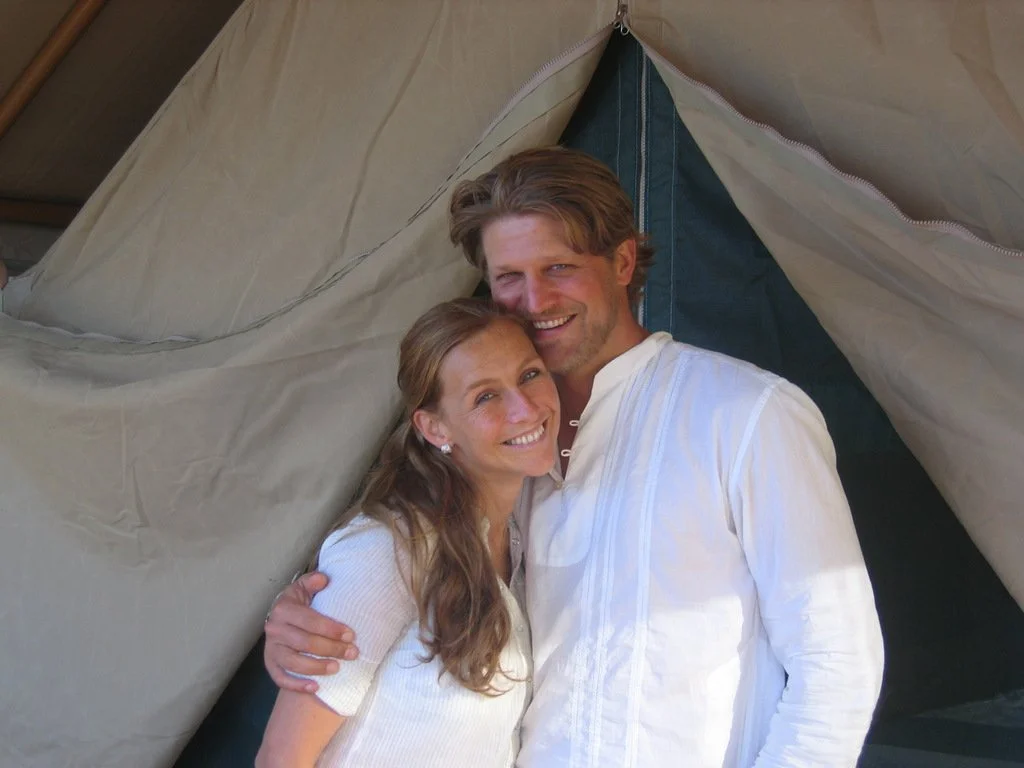
Galapagos Safari Camp began as a dream back in 2003, when Stephanie Bonham Carter (Ecuadorian British) and Michael Mesdag (Dutch Spanish) set off to explore the length and breadth of Stephanie’s country together.
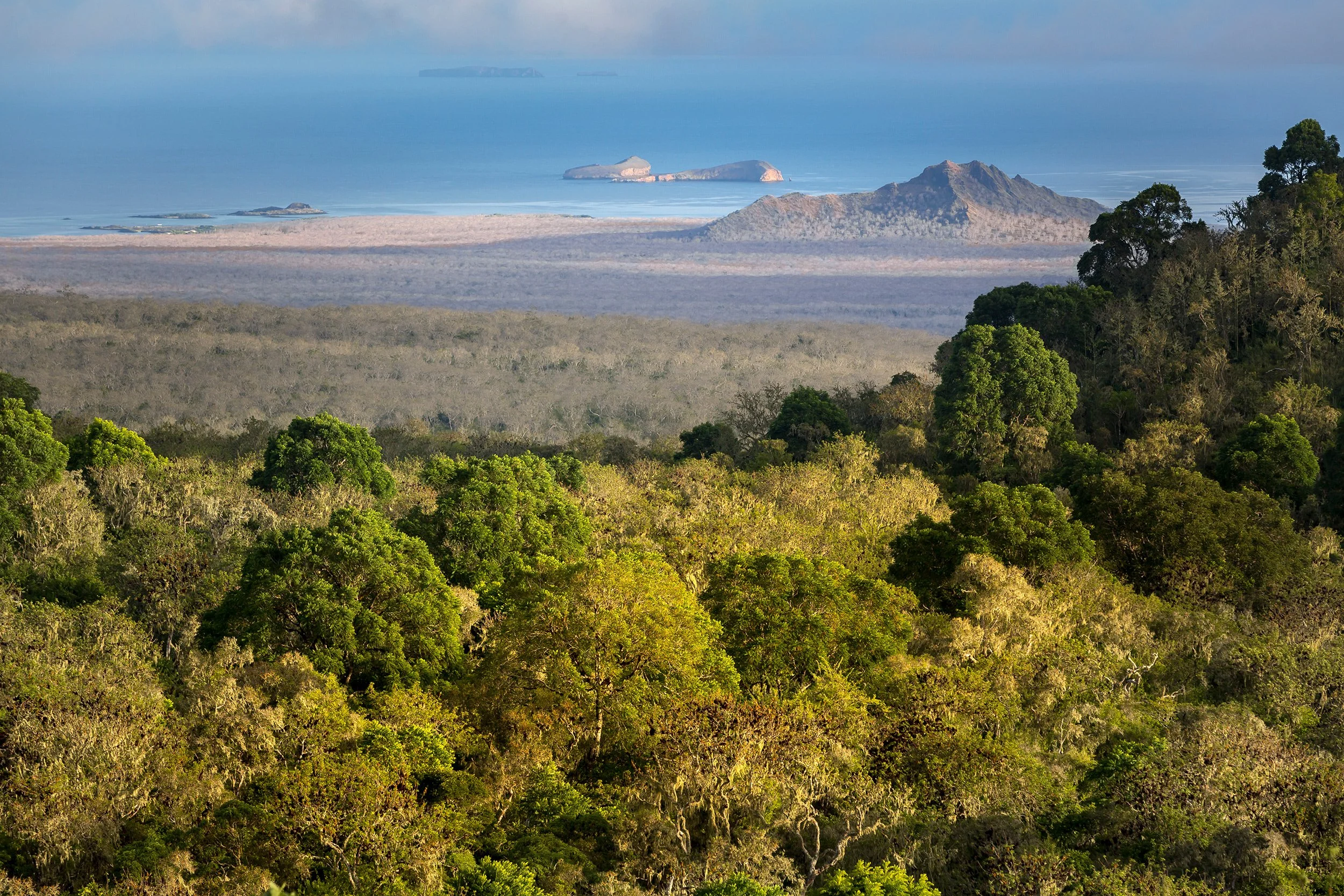
While exploring the Highlands of Santa Cruz Island, they came across a farm for sale bordering the Galapagos National Park. Climbing a tree to get a better look of the lay of the land, they were overwhelmed by the incredible views.
From that moment on, Michael and Stephanie set to work creating Latin America’s first tented camp. At the core of their vision was the desire to create a sustainable and individual experience, based on guests’ preferences, with comforts in fitting with this unique destination.
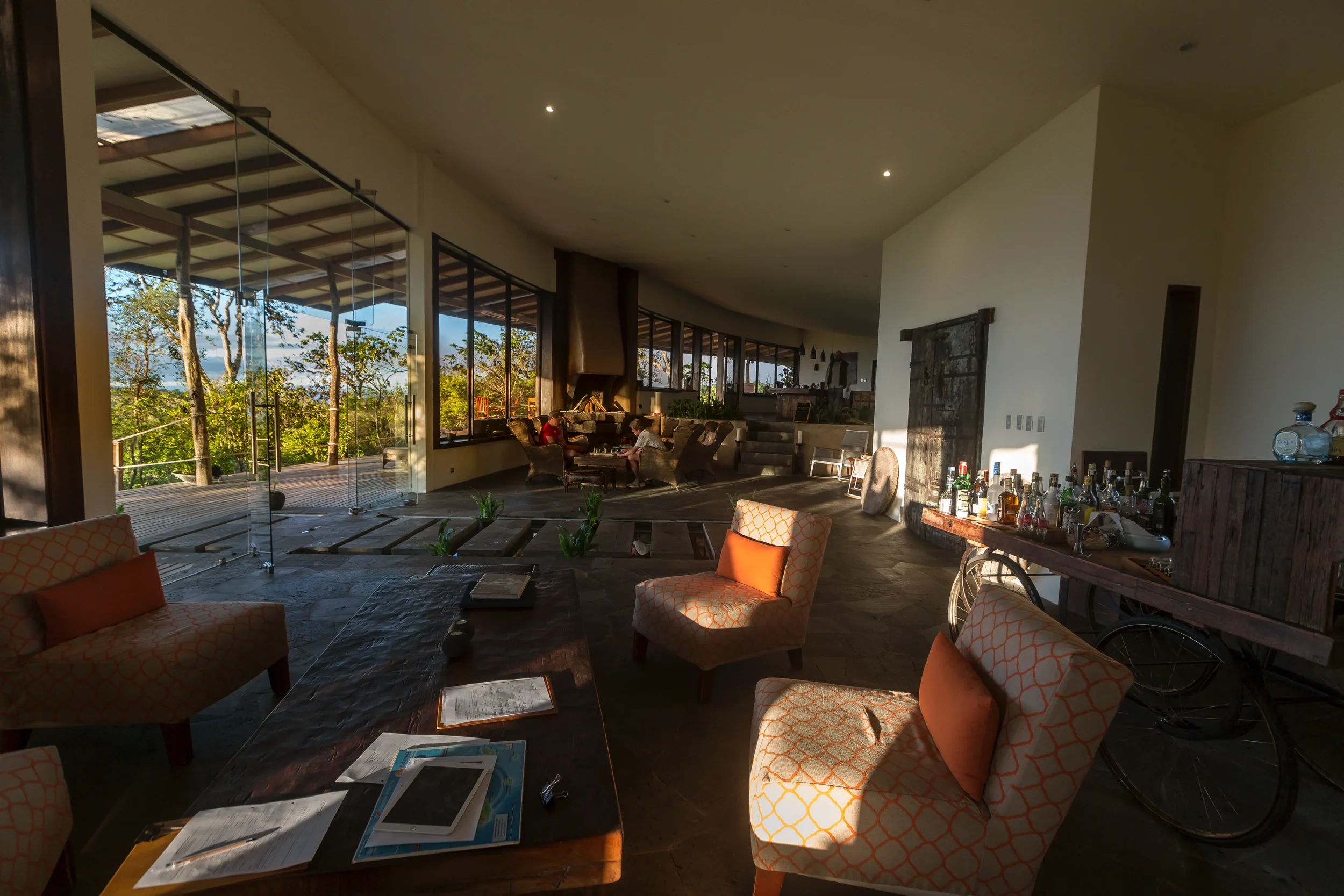
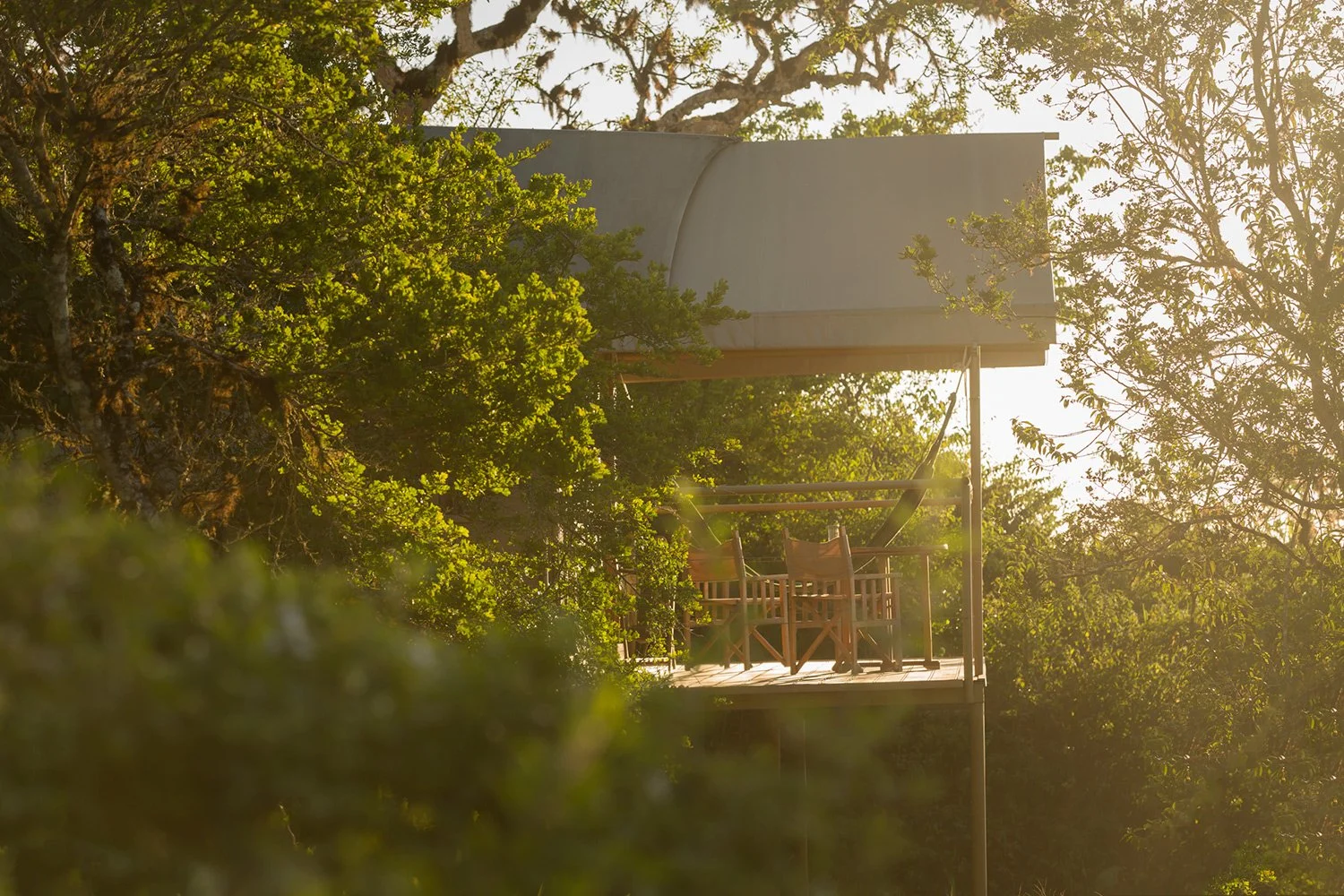
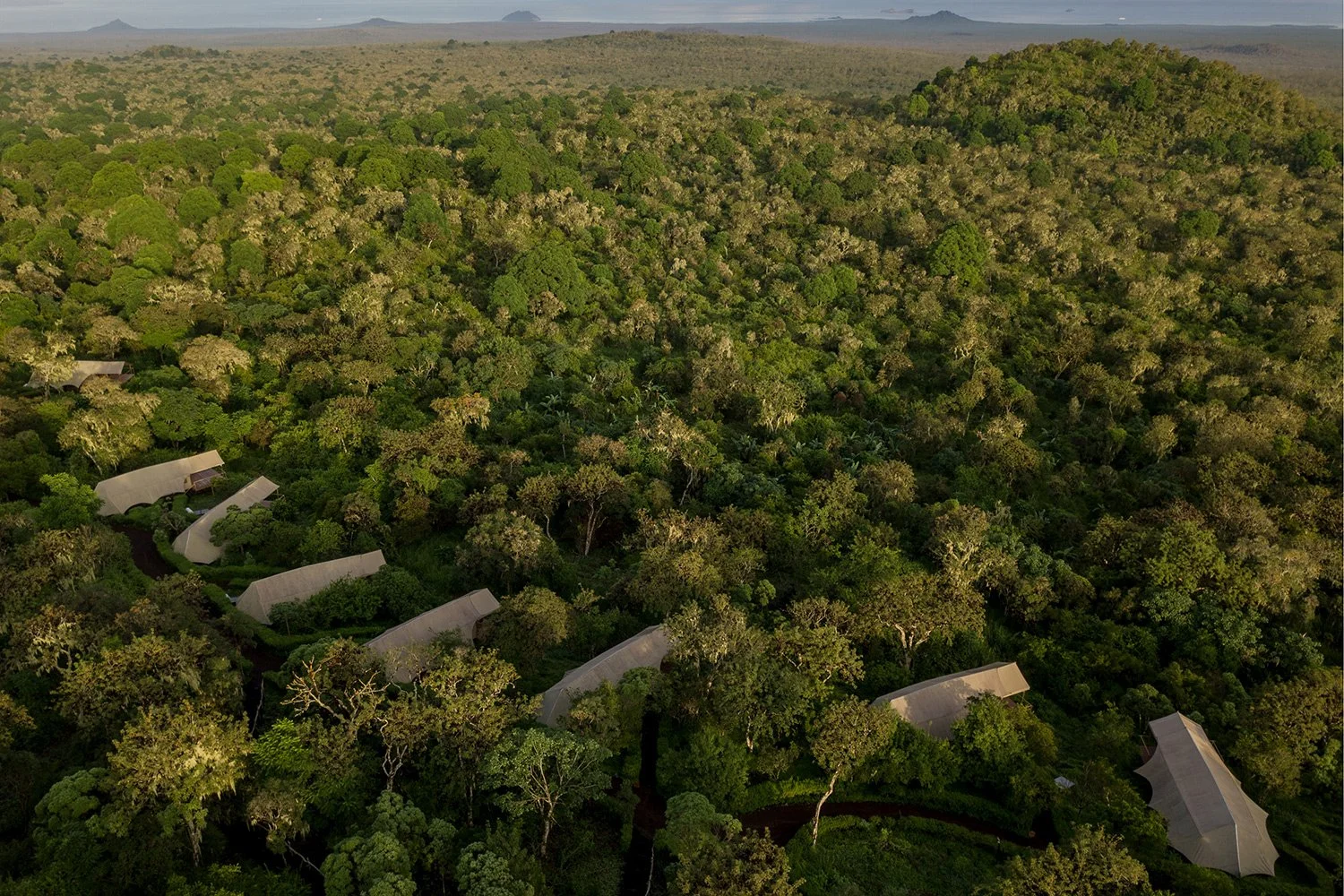
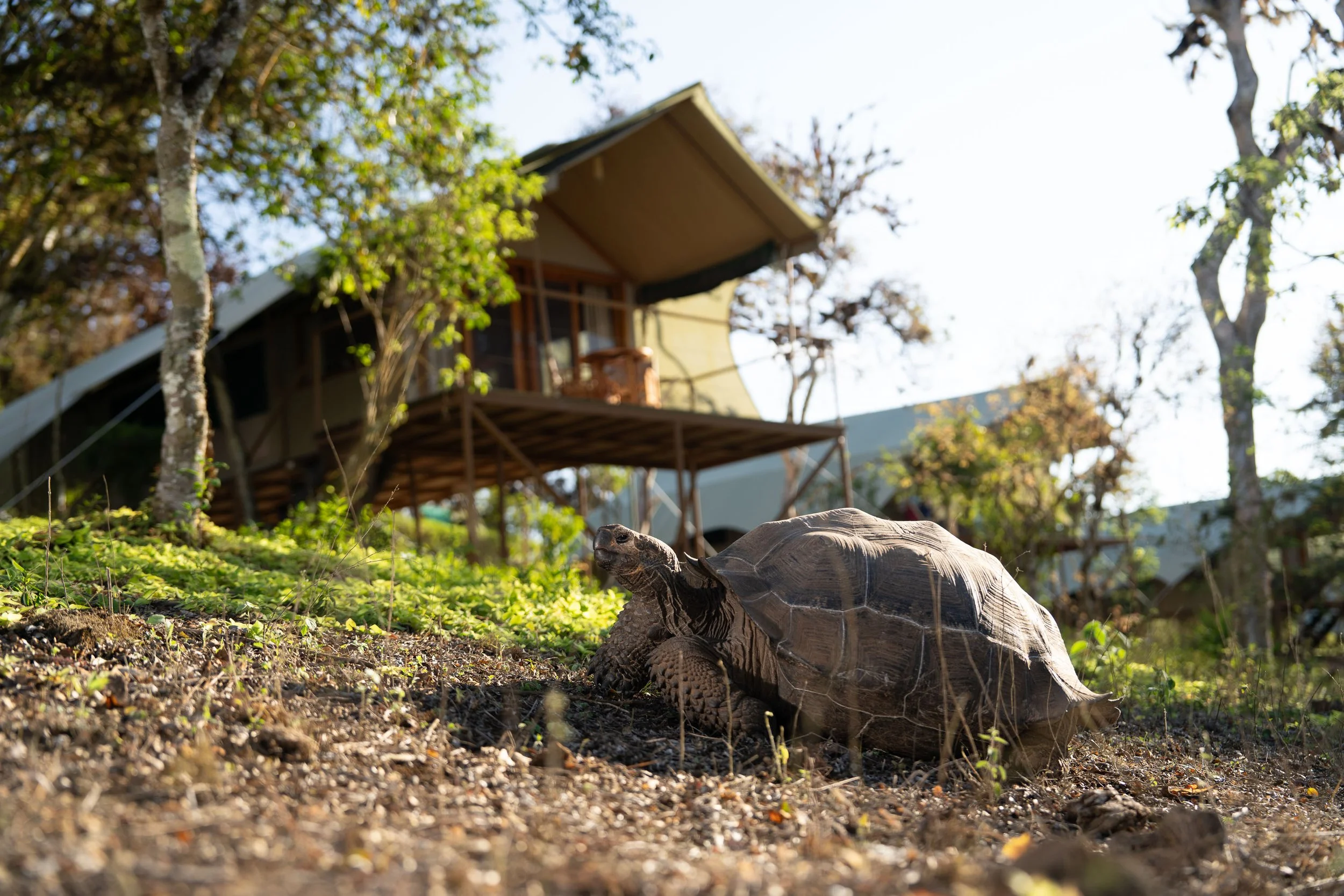
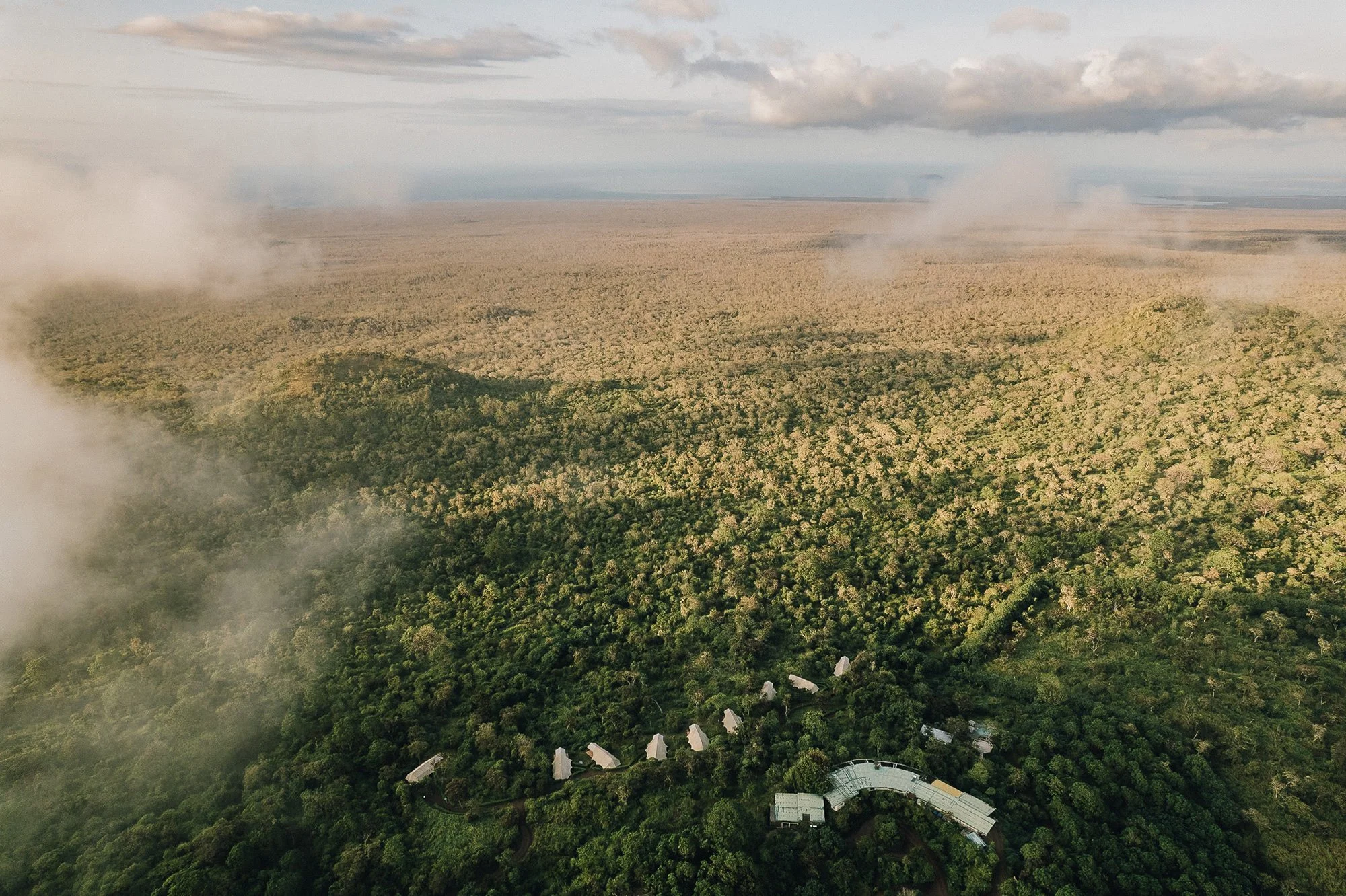
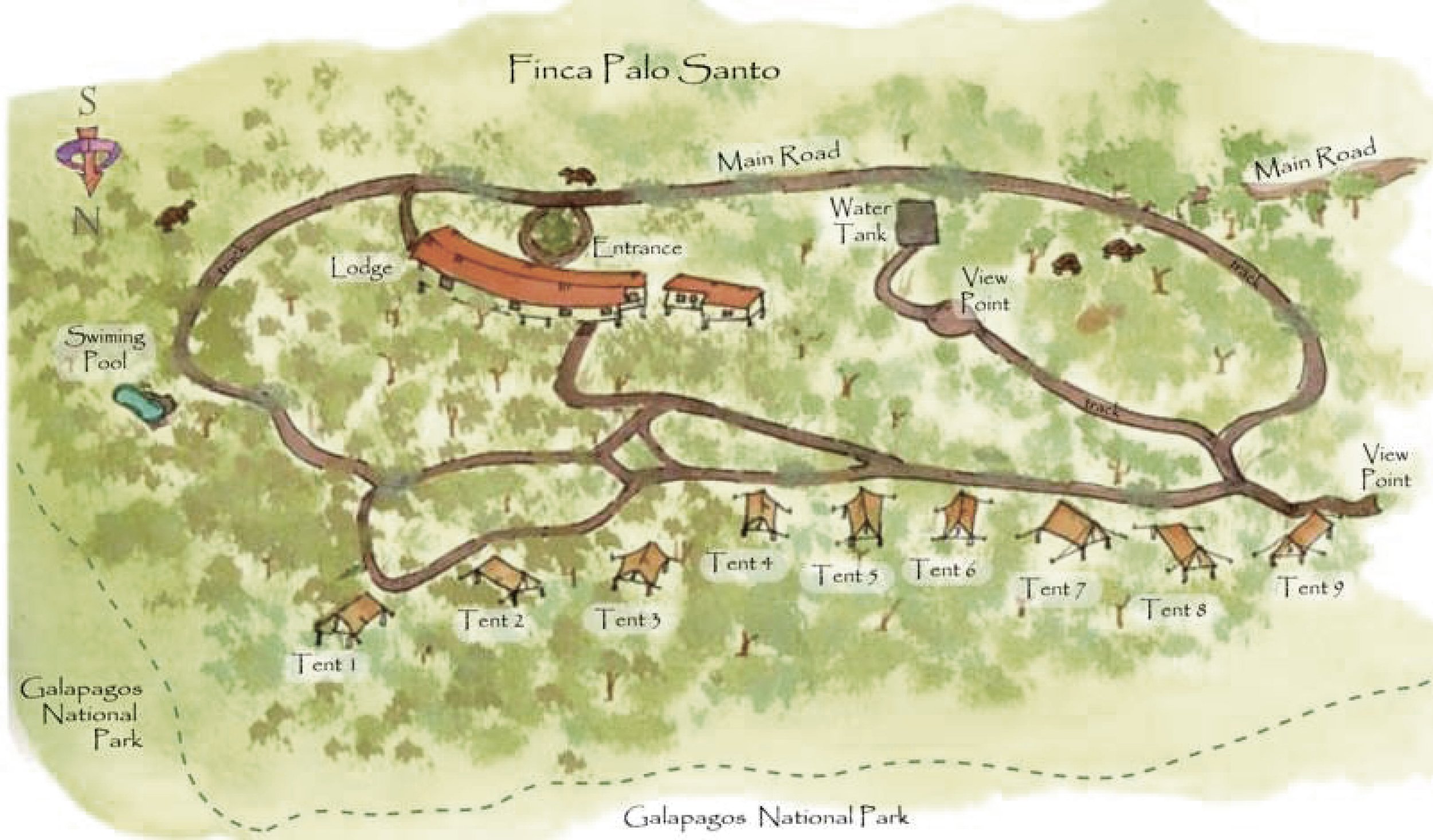
Located on the western side of Santa Cruz Island, the nine tents are built on stilts for minimal environmental impact. The property spans 135 acres (55 hectares) and is part of the main migratory zone for the iconic giant tortoises.
Surrounded by the Galapagos National Park, guests are immersed in nature on property, with open views in fitting with the owners’ desire to create a safari-style experience.
This land-based experience offers customised island and sea exploration along with exceptional service and seasonal gastronomy. Its slower pace enables guests to truly immerse themselves in the Enchanted Islands, called such by sailors who believed they floated.
www.galapagossafaricamp.com
info@galapagossafaricamp.com
Toll Free: 1-805-995-4093
“Below in the awesome green world that surrounded us… life itself seemed too incredible to be true. Yet undeniably there it was at my feet: unadulterated life waiting for me on an island demanding courage and wisdom.”
- My Father’s Island by Joanna Angermeyer
Quick Facts
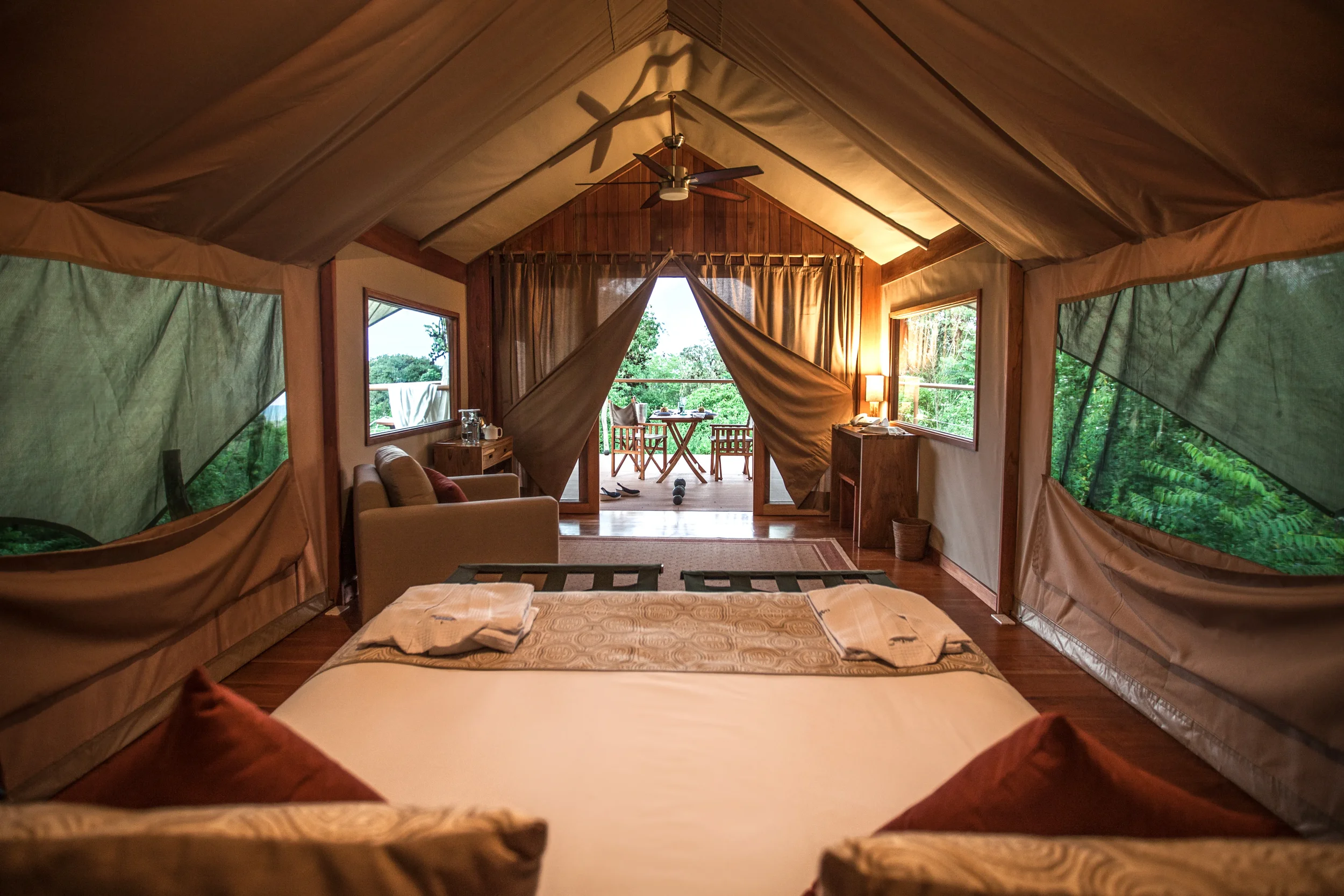
Number of Rooms: Nine Safari Tents and one Family Suite
Room Categories: There are three room categories: one Family Suite at 114m² (70m² interior, 44m² private deck), two Family Safari Tents at 90m² (70m² interior, 20m² private deck), seven Safari Tents at 70m² (56m² interior, 14m² private deck)
Booking Options: Experiences are tailored to suit guests’ needs and preferences. The final cost will vary based on personal selections.
Rates: From USD 2695 per person for 2N/3D ACTIVE Safari in a Tented Double
Dates of Operation: Open year round
Disabled access: Located in the highlands of Santa Cruz Island, the camp may present challenges for individuals with mobility impairments and has no dedicated facilities for wheelchair access
Amenities included: Tea & coffee, biodegradable soap, shampoo & conditioner, slippers & bathrobe
Wellness: Outdoor swimming pool, plus a massage tent
Air conditioning: Located in the highlands of Santa Cruz Island, where the climate is fresh and breezy for most of the year. Tents are carefully orientated to catch the natural air currents and are equipped with ceiling fans for additional comfort during the warmer months (Feb, March, April). The Family Suite is the only accommodation with air conditioning, as it is a three-bedroom, brick-and-mortar structure that cannot benefit from the natural air currents in the same way as the canvas tents
Internet: WiFi is available throughout most of the Camp, including the Main Lodge, Family Suite and all Safari Tents
“An inventive nightly tasting menu from the on-site organic farm or nearby sea was easily the best food we ate on the islands.”
EVENING STANDARD
Rates & Key Info
Boat or Land - which is right for me?
Whilst a boat covers more ground, in terms of cultural immersion a land-based stay goes deeper…
Land-based means tailor-made, free from fixed timetables or set group excursions
Day boat trips (shared or private, as preferred) are a core part of the experience, but guests return to firm ground at night
With two feet on firm ground, guests feel a deep understanding of the culture and history of the islands, and a connection with the stories of its first inhabitants
Day boat trips cover the iconic species: giant tortoises, sea lions, marine iguanas, penguins, blue-footed boobies, frigate birds
The location of Galapagos Safari Camp is excellent for diving and fishing (both available as additional activities)
“Being land-based, you feel a connection with the first settlers who came to live in the Galapagos Islands, having a greater understanding of what it must have been like to set up a life here back in the days when boats seldom passed by. Contrary to expectation, I felt a greater sense of adventure and appreciation for the remote and unique nature of the archipelago than past trips on a boat”
- Gabriel stayed at Galapagos Safari Camp with her 8-year-old in Nov 2025
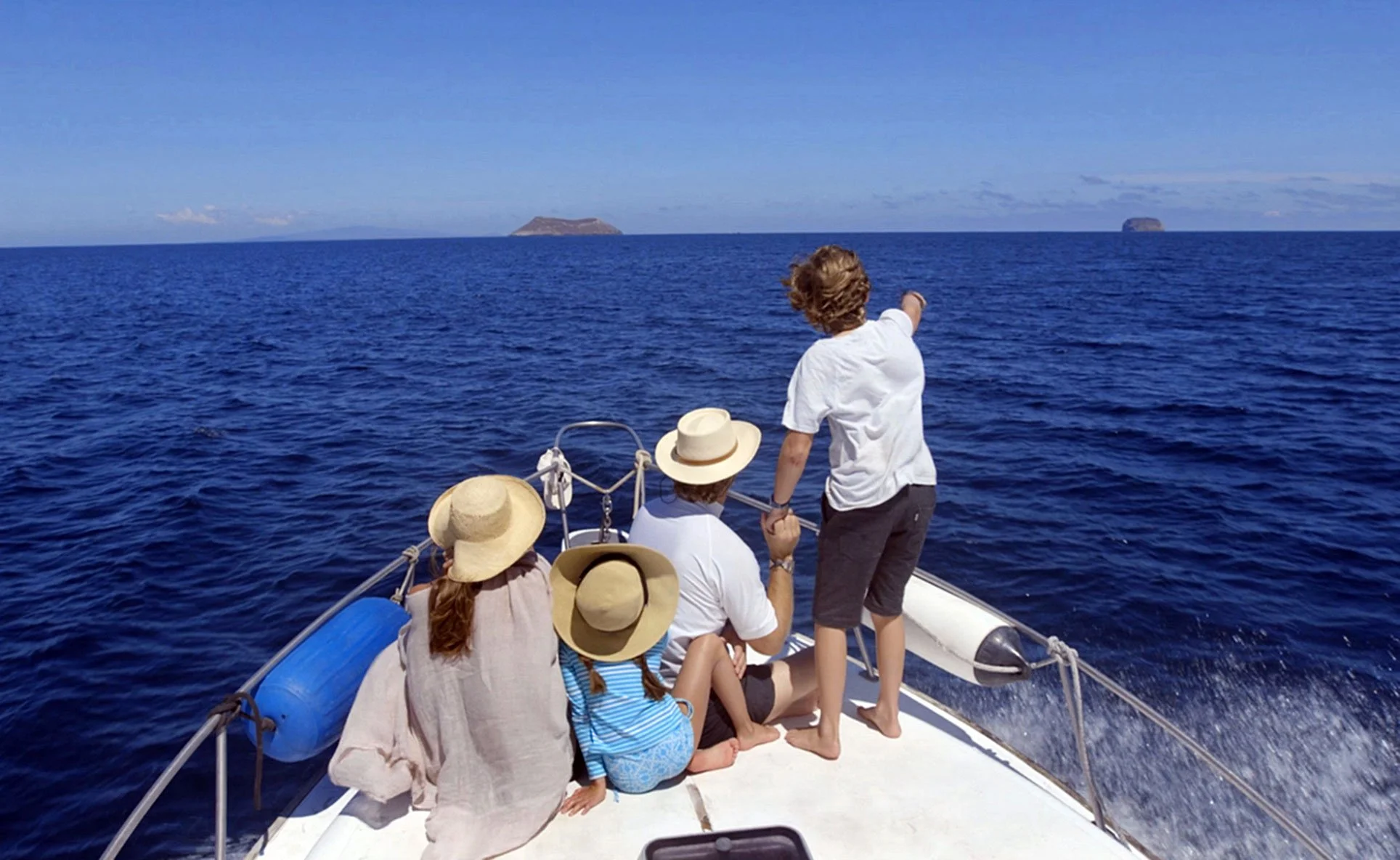
Boat Excursions
The islands visited on day boat trips include: Bartolome, North Seymour, South Plaza and Santa Fe.
Boats have a schedule determined by the Galapagos National Park and determined time slots for island visits.
Very few boats are licenced to visit the uninhabited island in the archipelago. Whilst none of them are “ultra luxury” GSC work with the top options.
Boats have capacity for 16 passengers (apart from one which can accommodate 20)
Boats have their own guide for the group. We recommend clients also take their own private guide which has a supplementary cost (confirmed during the booking process)
There is the option to privatize boats subject to availability
There is also the option to go on a fishing boat which takes guests to parts of Santa Cruz Island where cruises and day boats are not permitted to visit. This is great for secluded snorkelling and an enjoyable open sea fishing experience.
Why a Tented Camp?
Having experienced safaris in Africa, Michael and Stephanie were drawn to the untamed wilderness, sense of adventure, and deep connection to nature that sleeping under canvas brings. They wanted to bring this to the Galapagos Islands.
Age-old human shelter
Did you know the first tents were rudimentary shelters used by Paleolithic hunter-gatherers over 40,000 years ago? Sleeping below canvas allows you to feel closer to the surroundings.
Pulse of the place
Not coming from backgrounds in hospitality, the owners were not looking to build a traditional hotel. A Safari Camp aligned with their vision to create an experience that is personal, organic, and deeply rooted in the place.
“A part of my heart that had never before been touched began to ache for the innocence of Galapagos, where my kind had yet so little to be blamed for and so much to learn…”
- My Father’s Island by Joanna Angermeyer
“This place is a one-off: a dashing cockscomb of comfort and style atop a 400-metre ridge in the highlands of Santa Cruz… be careful not to trip over the meandering tortoises.”
TATLER
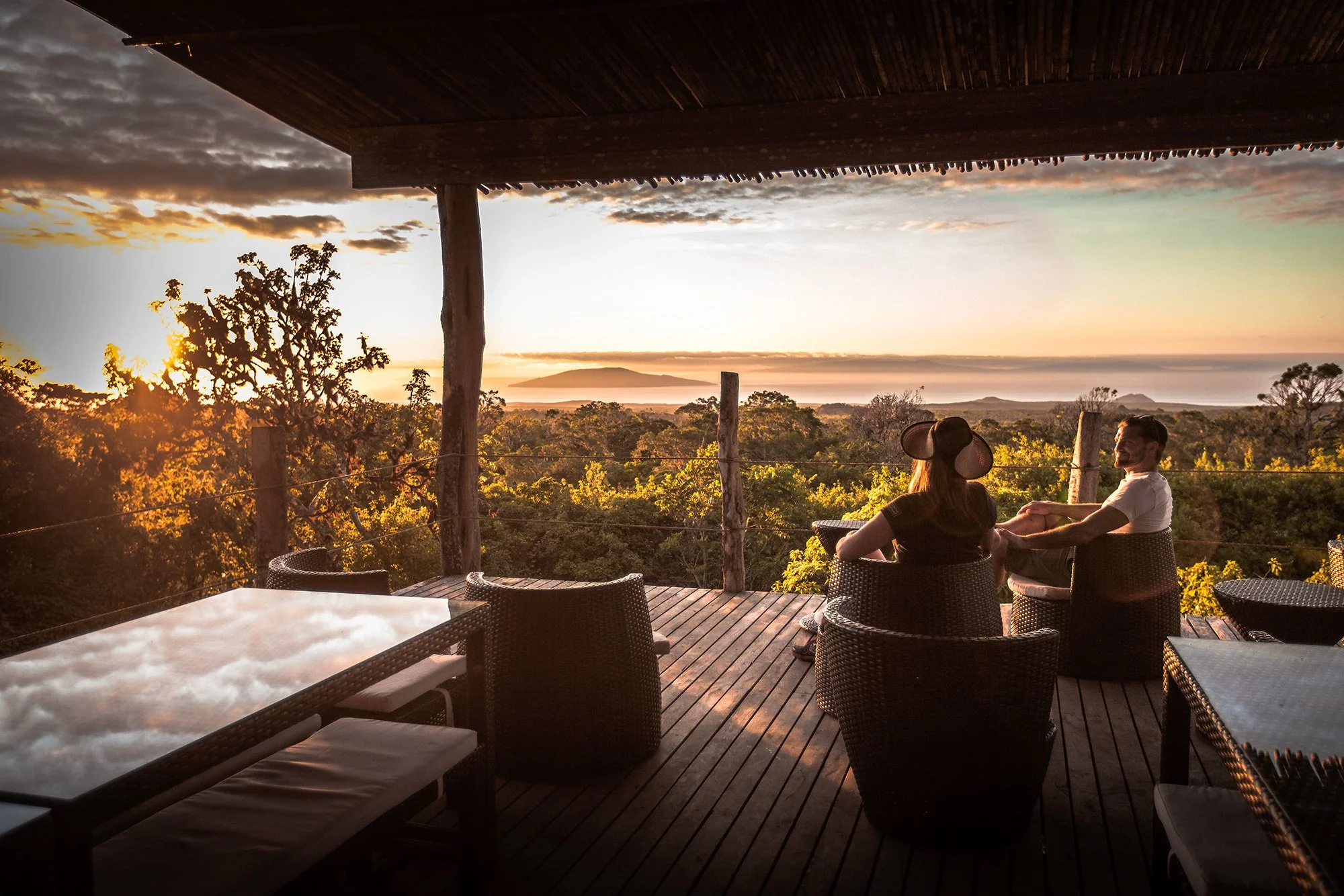
Tailor-Made Experience
Independent, family-owned and fully tailor-made, Galapagos Safari Camp sits in step with the archipelago where 97% of land is a National Park.
No two guests are the same so neither are the experiences at Galapagos Safari Camp. When planning your clients’ stay, you will work closely with the team to tailor make the itinerary according to individual needs.
The team is flexible during the planning stage of the trip but please note that both boat and land excursions must be confirmed during the booking process (it is hard to make changes on site due to national park restrictions).
During the booking process, the team will offer island visits on the basis of what is available and will make suggestions according to your clients’ interests, age, physical ability.
An understanding of the guests’ profile and expectations is hugely helpful. Guests are able to select their tent during the booking process also.
EXPLORE BY LAND, SEA & AIR
-
-
Sustainable since the outset, a deep respect for the surrounding environment has been prioritised since the beginning:
- Limited occupancy of 10 ‘rooms’ (9 tents and 1 Family Suite)
- Choosing canvas over concrete
- Solar powered hot water
- Using water responsibly, with rainwater harvesting
- Minimising food wastage and sourcing food responsibly
- Rewilding a former cattle farm
- Supporting our local community
- Restricting the use of plastics
See more here: https://www.galapagossafaricamp.com/sustainability/
-
Galapagos Safari Camp welcomes children and babies of all ages.
Living in what is now the Family Suite, Michael and Stephanie raised their two children on the farm while creating the Camp and managing the business. It became a way of life—one that connected them to the land, and one that would ultimately define Galapagos Safari Camp’s pillars of Appropriate Luxury: Connection, Authenticity and Hospitality.
-
Despite sitting on the equator, the Galapagos Islands do not have a tropical climate. It never gets unbearably hot, making it a very pleasant, all-year-round destination.
There are two distinct seasons in the Galapagos: the warm & wet season (December/January to June/July) and the cool & dry season (June/July to November/December). The seasons are mostly determined by the trade winds, which in turn affect the ocean currents, which in turn affect the weather.
In the warm & wet season, land and sea temperatures rise, rain tends to be intermittent and dramatic with clear blue skies breaking through between downpours. Vegetation is green and lush, particularly in the highlands, and the seas are calmer, making this a good time of year to visit if you are prone to seasickness.
In the cool & dry season(the garua season), air and sea temperatures are slightly cooler, meaning you may require a few more layers in the evenings. However, you will unlikely need a sweater during the day as temperatures still remain very pleasant. For those less tolerant of the heat, the cool & dry season is a good time to visit. There is less rain, but the skies are mistier. The sea can get a little choppy, particularly in September and October. This season is when marine life is at its most abundant making it a great time to visit if you enjoy snorkelling and diving .In general, the flora and fauna is fascinating, no matter what time of year you visit. Rest assured there is never a dull moment on the wildlife front in the Galapagos Islands
For more information on the weather, including a month-by-month analysis, please visit: https://www.galapagossafaricamp.com/when-to-visit-galapagos/Packing
-
Generally, it is best to bring tropical, lightweight, quick-drying, and lose fitting clothes that offer some sun protection. Good walking shoes are highly recommended, as a lot of the terrain is volcanic. You will most likely spend time on boats, swimming and snorkelling in the ocean, so protective swimwear is important. GSC provide wetsuits and snorkelling equipment for excursions. During the day, many people wear shorts and t-shirts, though trousers and long sleeves are advisable.
At Galapagos Safari Camp the dress code is casual. In the evening, guests often wear long trousers and loose-fitting long-sleeved shirts, as it can be chilly in the highlands where GSC is located. Here are some suggestions, in addition to your normal clothes:
One warm fleece and a windbreaker or waterproof jacket are nice to have, particularly if you are visiting between June-November.
Light waterproof jacket or water poncho
A small backpack for outings
A good pair of walking shoes (clunky hiking boots are not needed)
The best footwear is a pair of sports sandals with a good sole on them. (Brands: Teva, Chaco)
A wide-brimmed sun hat
A water bottle or hydration pack (such as camelback) to take on excursions
High factor sun block (remember you are on the Equator so the sun is intense), moisturizing cream or sunburn relief aloe vera
Good walking shoes (hiking boots not needed - best footwear is a pair of Teva or Chaco type sports sandals)
Sunglasses with a retainer strap
A small bottle of insect repellent (horse flies can be an issue at some landing sites in the Galapagos)
A small flashlight or headlamp is great for use at GSC walking between the tents (they have some available to loan if you forget!)
Motion sickness tablets if you are prone to getting seasick, this would be for day yacht trips to other islands
Swimsuits and a Lycra rash guard for snorkelling/swimming and sun protection
Photography equipment with an extra memory card(s) and a waterproof carrying bag
Please bring only biodegradable shampoo & rinse or use GSC supplied biodegradable bath amenities
Binoculars
Swimsuits
Rash vests
Camera
*Wetsuits and snorkelling gear are provided for yacht trips and snorkelling trips, no need to bring your own, however, if you have very large feet we encourage you to ask us ahead of time to ensure GSC have the right size. Also, if you require a prescription snorkelling mask, you should bring one with you
Property Location
Airports: Domestic flights from mainland Ecuador depart from either Quito (UIO) or Guayaquil (GYE) to Seymour Airport (GPS) on Baltra Island.
Upon arrival, a Galapagos Safari Camp guide will meet guests in the VIP Lounge while the team handles the paperwork required by the Galapagos National Park. Guests then take a 10-minute drive to the Itabaca Channel, cross by boat to Santa Cruz Island, and continue by car to the Camp. This typically takes around 25 minutes, but note the Safari begins en route, with stops at visiting sites along the way to make the most of your first day.
From the moment you land in Ecuador to your arrival at camp, Galapagos Safari Camp takes care of all the logistics.
WHERE TO STAY IN GUAYAQUIL?
Hotel del Parque, Hotel Guayas and Hotel del Oro are all good options in Guayaquil city. If you have time, we highly recommend you take a 90-minute transfer and have a countryside experience at Hacienda La Danesa.
Galapagos Safari Camp Webinar - 2026